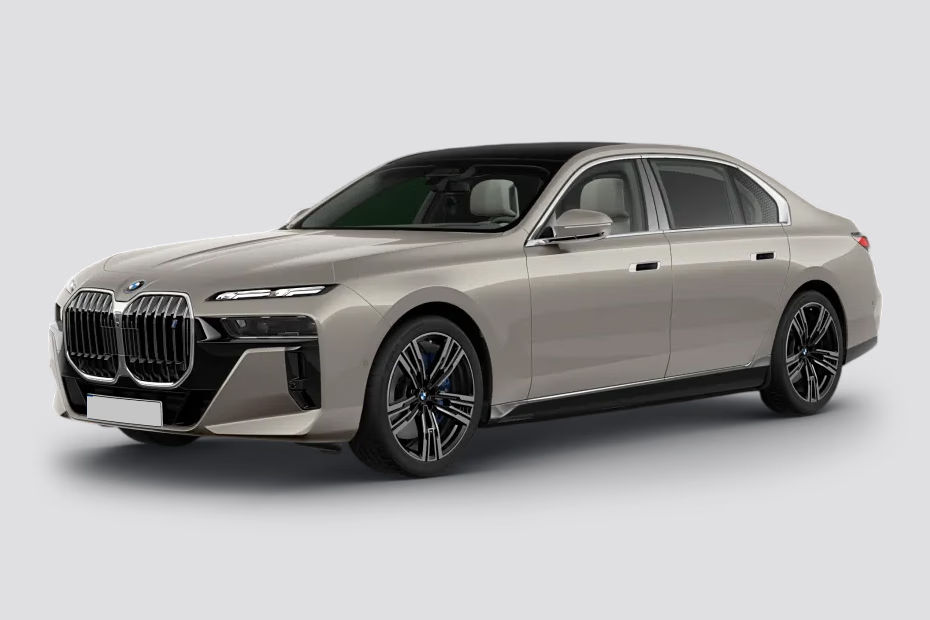
BMW i7
2022
The BMW i7 model is the battery electric variant of the G70. Unveiled simultaneously with its ICE counterpart, the vehicle features a similar powertrain setup to the iX crossover SUV: an excited synchronous electric motor at the rear on rear-wheel drive models and a motor at both front and rear axles on all-wheel drive models. These models are built upon a 400 V battery architecture. The i7 is the only model to be available with the Executive Lounge package. These models are built at the same assembly line in Dingolfing has the internal combustion models, as well as its E-segment counterpart.
The models are fitted with BMW's in-house electric motors, seen on the I20 iX and the G60 i5. The i7's gross and usable battery capacities are 105.7 kWh and 101.7 kWh, respectively. The lithium-ion units have a battery voltage of 376.4 V, producing an all-electric range of up to 625 km (388 mi). The single-motor eDrive50, which was introduced in May 2023 as the entry-level i7, features BMW's eDrive which produces an output of 335 kW (449 hp) and 650 N⋅m (479 lbf⋅ft). Its estimated all-electric range is 575–611 km (357–380 mi) at a WLTP standard. The xDrive60 features dual eDrive motors which produce a combined output of 400 kW (540 hp) and 745 N⋅m (549 lbf⋅ft). All-electric driving ranges from 591–625 km (367–388 mi). The range-topping M70 xDrive model features dual eDrive motors that produce a combined output of 485 kW (650 hp) and 1,100 N⋅m (811 lbf⋅ft).
The i7 has minimal updates to the regenerative braking system from the full-electric iX and i4 models. The driver can select different regenerative braking levels and use the highest level for one-pedal driving. Adaptive recuperation is the standard configuration when in driving position D. The driver can experience three levels of brake regeneration settings, low, medium and high.
Batteries are positioned beneath the floor, and due to this, boot/trunk space decreases from 540 litres (19 cu ft) on the ICE models to 500 litres (18 cu ft).